Supplemental Security Income (SSI) for Noncitizens in the U.S.
SSI (Supplemental Security Income) is a government program that provides monthly payments to individuals who have limited income and resources, including some noncitizens living in the United States. It is separate from Social Security retirement or disability benefits.
Many immigrants and noncitizens have questions about eligibility, rules, and payments while living abroad. This guide summarizes the key points and clarifies some confusing SSA rules.

Who Can Receive SSI as a Noncitizen?
To qualify for SSI, noncitizens must meet two main criteria:
You must be in a “qualified alien” category recognized by the DHS. These include:
- Lawfully admitted for permanent residence (LPR or “green card” holders).
- Refugees or asylees.
- Paroled into the U.S. for at least one year.
- Cuban/Haitian entrants or Amerasian immigrants.
- Afghan or Iraqi special immigrants, Afghan humanitarian parolees.
- Ukrainian humanitarian parolees.
- Certain noncitizen members of federally recognized Indian tribes.
You must meet at least one additional eligibility condition, such as:
- Having 40 work credits in the U.S. (or counting a spouse’s or parent’s work).
- Being a veteran or a dependent of a veteran.
- Being lawfully present and disabled or blind before August 22, 1996.
- Being an American Indian born in Canada.
- Being a victim of severe forms of human trafficking.
Some noncitizens may receive SSI for up to 7 years after obtaining their eligible immigration status. SSA sends letters notifying recipients when the 7-year limit is approaching.
Work Credits and SSI
Noncitizens may need work credits to be eligible for SSI. Work credits are earned based on your income from work in the United States. You can earn up to 4 credits per year. Work done by your spouse or parent may also count toward your eligibility, but these extra credits do not increase your SSI payment amount.

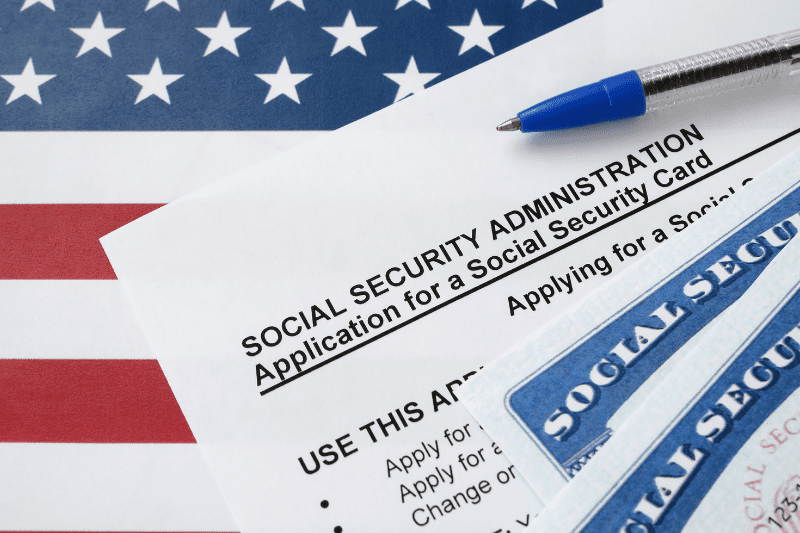
Proof of Status
When applying for SSI, you must provide proof of:
- Immigration status: DHS Form I-94, I-551 (green card), or an order from an immigration judge granting asylum or withholding deportation.
- Military service, if applicable: U.S. military discharge papers (DD Form 214) showing honorable discharge.
Your local SSA office can advise on additional required documents.
Payments While Outside the U.S.
SSA rules about being outside the United States can be confusing because different official sources highlight slightly different rules. Here’s a clear explanation:
Basic SSI Residency Rule (applies to everyone)
SSI is only paid for months you are physically present in the U.S.
If you are outside the U.S. for 30 consecutive days, payments are suspended until you return and remain in the U.S. for 30 consecutive days.
Exceptions exist for blind/disabled children of U.S. military parents or students studying abroad temporarily.
Extra Rule for Noncitizens
Noncitizens may have an additional restriction: SSA may stop payments if you are outside the U.S. for 6 consecutive calendar months, unless you meet certain special conditions.
Payments will not restart until you return and remain in the U.S. for one full calendar month.
Note: SSA’s POMS manual (secure.ssa.gov) and SSA FAQ (ssa.gov) may appear to conflict, but they are describing two related rules: The 30-day rule for general SSI presence (applies to all recipients). The 6-month rule for noncitizens (an additional restriction specific to noncitizens).
What if You Have a Sponsor?
Some noncitizens have a sponsor who signed an affidavit of support when entering the U.S. SSA generally counts a portion of the sponsor’s income and resources as yours when determining SSI eligibility. Check with your local SSA office for details.

Becoming a U.S. Citizen
If you are a noncitizen, becoming a U.S. citizen may simplify your SSI eligibility.
USCIS may provide fee waivers and expedited processing for certain SSI recipients.
You can contact U.S. Citizenship and Immigration Services (USCIS) to apply for naturalization: www.uscis.gov or call 1-800-375-5283 (TTY 1-800-767-1833).
SSI is a means-tested benefit requiring limited income/resources and physical presence in the U.S.Noncitizens have additional rules: special categories, 7-year limits, and 6-month absence restrictions.
There may appear to be conflicting information in SSA sources; it’s usually due to different rules for citizens vs. noncitizens and different contexts (general eligibility vs. international absence). Always consult SSA or a qualified advisor for your individual situation.
Frequently Asked Questions (FAQ)
Explore Our Articles

Social Security Benefits for Immigrants
Understanding Social Security as an immigrant can be confusing, but it doesn’t have to be. This article explains how noncitizens may qualify for SS benefits. Learn the rules, exceptions, and strategies to make the most of your Social Security benefits.

A Million-Dollar Baby
Planning your child’s financial future starts early. “A Million-Dollar Baby” explores how parents can set up savings, investments, and tax-advantaged accounts to grow wealth over time and give their child a strong financial foundation. Simple, practical steps make long-term planning achievable, even on a modest income.

Insurance for Immigrants
Insurance can protect you and your family from unexpected medical, disability, or financial risks, but the rules can differ for immigrants. This article breaks down different life and other insurance options, explains eligibility requirements, and shows how to choose coverage that fits your unique situation in the U.S.